
On May 5, 2026, Google quietly made a move that caught the attention of SEOs, developers, and Generative Engine Optimization (GEO) practitioners alike. The company added support for llms.txt within Chrome Lighthouse, placing it under a new category called Agentic Browsing Audits in the Chrome for Developers documentation. (Chrome for Developers)
While Google has repeatedly stated that llms.txt is not required for search rankings or visibility in AI-powered search experiences, its inclusion in Lighthouse signals something important: Google is beginning to measure how well websites serve AI agents and machine-driven browsing experiences. (Search Engine Land)
For website owners, publishers, and WordPress users, this development is worth paying attention to.
What is llms.txt?
The llms.txt file is an emerging web standard designed to provide large language models (LLMs) and AI agents with a machine-readable summary of a website. Rather than forcing an AI system to crawl hundreds or thousands of pages to understand a site’s purpose, the file offers a concise overview of the site’s content, structure, and key resources. (Chrome for Developers)
Think of it as a companion to familiar web standards like robots.txt and XML sitemaps.
A typical llms.txt file may include:
- A summary of the website’s purpose
- Important content sections
- Key documentation or resources
- Links to high-value pages
- Context that helps AI systems understand the site more efficiently
According to Google’s Lighthouse documentation, the goal is to help AI agents quickly understand a website’s structure and primary content. Without the file, agents may spend additional time crawling and interpreting a site’s content. (Chrome for Developers)
Google’s new agentic browsing audits
The addition of llms.txt is part of a broader effort by Google to evaluate websites from the perspective of AI agents rather than traditional human visitors.
The new Agentic Browsing category in Lighthouse examines how effectively a website supports machine interaction. Alongside llms.txt, the audits also evaluate factors such as:
- Accessibility tree quality
- Layout stability
- WebMCP integration
- Machine-readable site structure
Unlike traditional Lighthouse scores for performance or SEO, Agentic Browsing focuses on whether AI systems can reliably understand and interact with a website. (Chrome for Developers)
Google’s documentation specifically notes that Lighthouse checks for the presence of a machine-readable summary at the domain root and evaluates whether the llms.txt file can be successfully retrieved. If the file does not exist, the audit is currently marked as “Not Applicable” rather than a failure, indicating that the protocol remains optional for now. (Chrom for Developers)
Why this matters
The significance of this change extends beyond a single Lighthouse audit.
For years, technical SEO has focused on helping search engines crawl, index, and understand websites. As AI-powered assistants, browser agents, and autonomous systems become more capable, websites must also be optimized for machine interaction.
Google’s inclusion of llms.txt in Lighthouse does not mean the file is a ranking factor. In fact, Google has explicitly stated that site owners do not need llms.txt files to appear in AI search features. (Search Engine Land)
However, the decision to include the protocol in a major developer tool demonstrates that Google considers AI-agent readiness a legitimate aspect of website quality. (PPC Land)
Historically, many technologies that began as optional best practices eventually became standard components of modern web development. While nobody can predict the future role of llms.txt, Google’s decision to measure it suggests that the company sees value in helping machines understand websites more efficiently.
The connection to generative engine optimization
Generative Engine Optimization is about making content discoverable, understandable, and usable by AI systems.
As more users rely on AI assistants instead of traditional search results, website owners need to think beyond rankings and clicks. They need to consider how AI systems consume information.
This is where llms.txt fits into a broader GEO strategy.
A well-structured llms.txt file can:
- Provide clear context about your website
- Surface important content sections
- Reduce ambiguity for AI agents
- Improve machine understanding of your expertise and offerings
While llms.txt alone will not guarantee visibility in ChatGPT, Gemini, Claude, or other AI systems, it can complement a broader strategy that includes high-quality content, structured data, entity optimization, and strong technical SEO foundations.
What WordPress site owners should do
For WordPress users, now is a good time to begin experimenting with llms.txt.
The implementation process is relatively simple, but maintaining a high-quality file can become challenging as a site grows. As pages are added, updated, or removed, the file must remain accurate and useful.
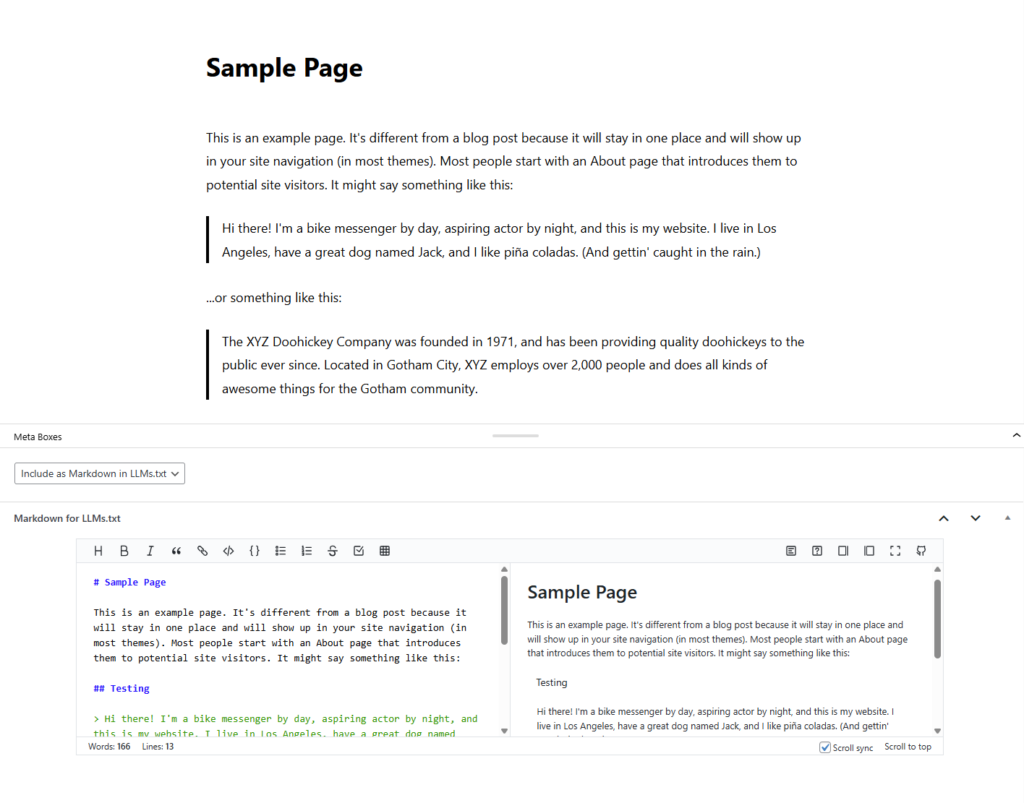
One option is to use a dedicated WordPress plugin that automates much of this work. The Curated LLMs.txt plugin was specifically designed to help site owners generate and manage optimized llms.txt files without manually maintaining them. It also allows publishers to curate the content and resources that AI systems are most likely to find valuable.
For websites actively pursuing GEO strategies, this can help ensure that AI agents receive a clean, structured overview of the site’s most important information.
Looking ahead
Google’s addition of llms.txt to Lighthouse may not be a ranking signal, but it is a meaningful indicator of where the web is heading.
The emergence of Agentic Browsing Audits suggests that developers will increasingly need to consider how AI systems navigate and interact with websites. As AI agents become more capable of browsing, researching, and completing tasks on behalf of users, machine-readable standards will likely become more important.
Whether llms.txt ultimately becomes a widely adopted standard remains to be seen. What is clear is that Google now considers AI-agent accessibility important enough to include in one of the web’s most widely used auditing tools. (Chrome for Developers)
For WordPress site owners and GEO practitioners, that alone makes it worth paying attention to.